
Signs your loft insulation needs replacing
Most old insulation can be topped up rather than replaced. But some has to come out first. These are the signs that it’s time.
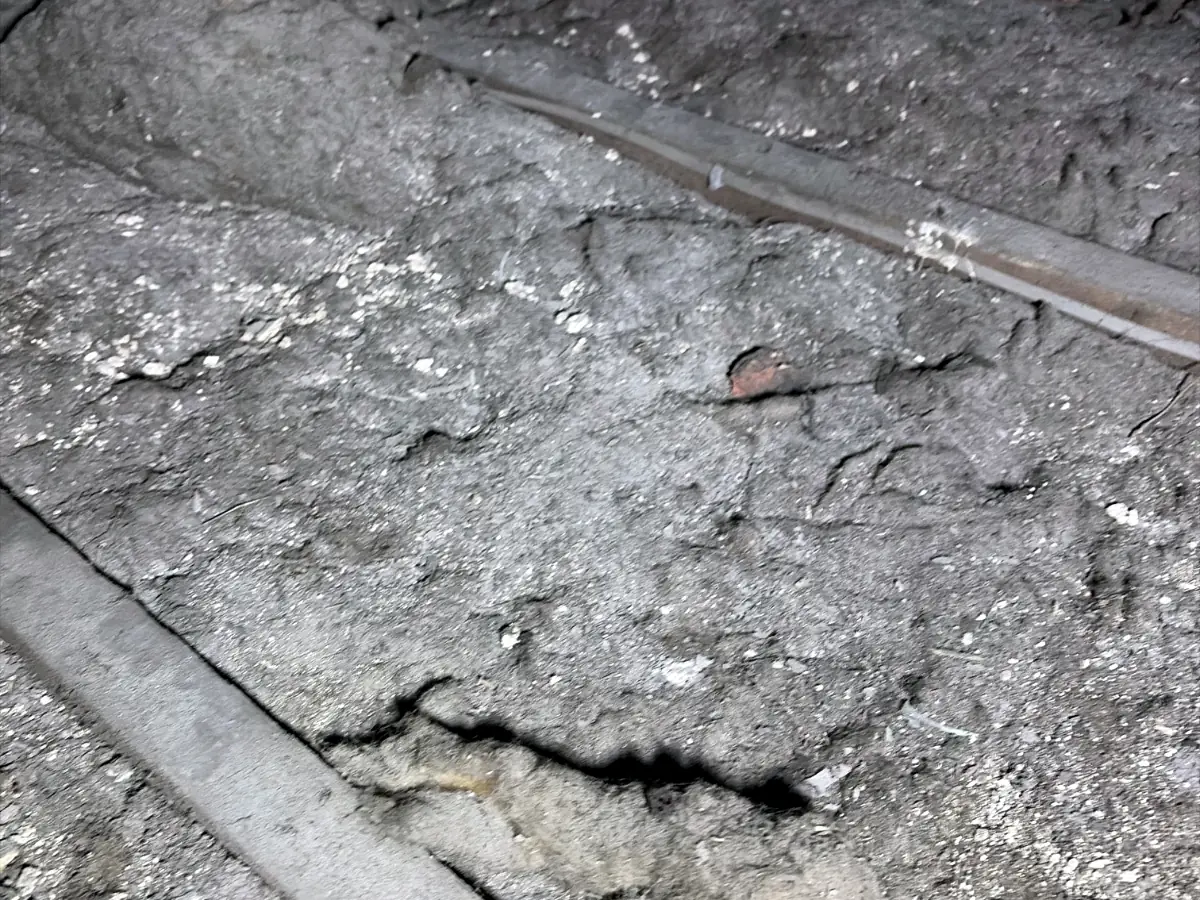
Photo: Grey, flattened insulation like this usually needs to come out rather than be topped up.
It can usually stay if…
…it is dry, clean, reasonably even and springy. A new layer laid across the joists on top brings it up to depth: a top-up.
It probably needs to come out if…
- It’s wet or has been wet. Soaked insulation insulates poorly and holds moisture against timbers. Fix the cause first.
- There’s mould on it. Black or green patches mean moisture has been there for a while.
- Pests have been in it. Droppings, urine, nests and tunnels contaminate it and the smell lingers.
- It’s crushed flat. Insulation that has been stored on or walked over for years may not recover.
- It’s very old and crumbling, or a type you don’t recognise. If you’re unsure what it is, don’t disturb it and let us look.
- Something has to be done underneath it, such as rewiring, plumbing, or ceiling repairs.
What removal involves
Old insulation is bagged up in the loft, carried out and disposed of, the loft is cleaned, and new insulation is laid to full depth. See loft insulation removal.
A note on old materials
Some older lofts contain loose-fill materials laid decades ago. Most are harmless, but asbestos-based loose fill was used in a small number of homes. If you find a grey, fluffy loose fill you can’t identify, leave it alone and get advice before anyone disturbs it.
Common questions
Can I put new insulation over damp insulation?
How long does loft insulation last?
Ready for a free loft insulation quote?
Tell us about your home and we’ll give you a written quotation before any work begins.